Sabtu, 29 April 2006

The downloadable gibberish “Asian font” has finally reached the country of Turkey.

A recent posting in BMEzine’s gallery titled “Art by Vaso” displays this piece of gem:


http://www.bmezine.com/tattoo/A60421/high/bmegl258969.jpg

Reader U.A. from Istanbul has also sent me these two photos:
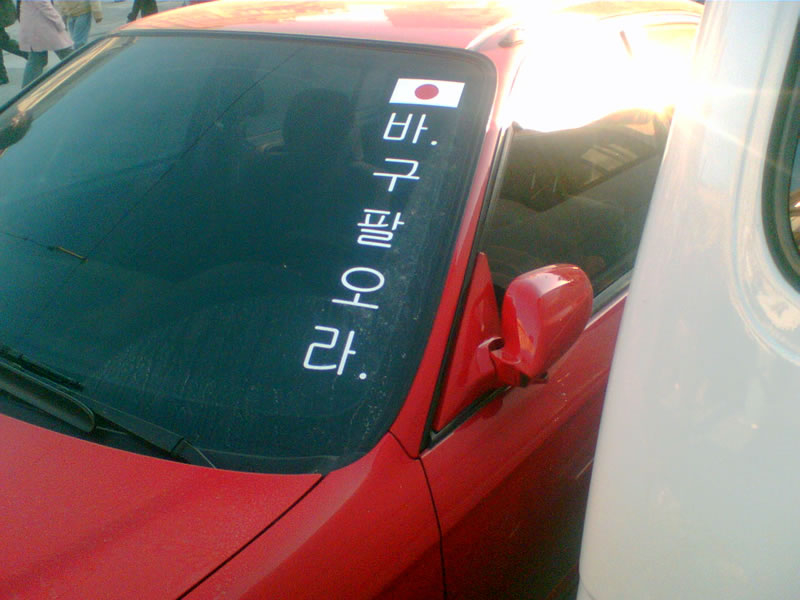
car_japanflaghangul

Despite all the recent frictions between South Korea and Japan, it is nice to see a Japanese flag sharing the same piece of windshield in harmony with Korean Hangul.
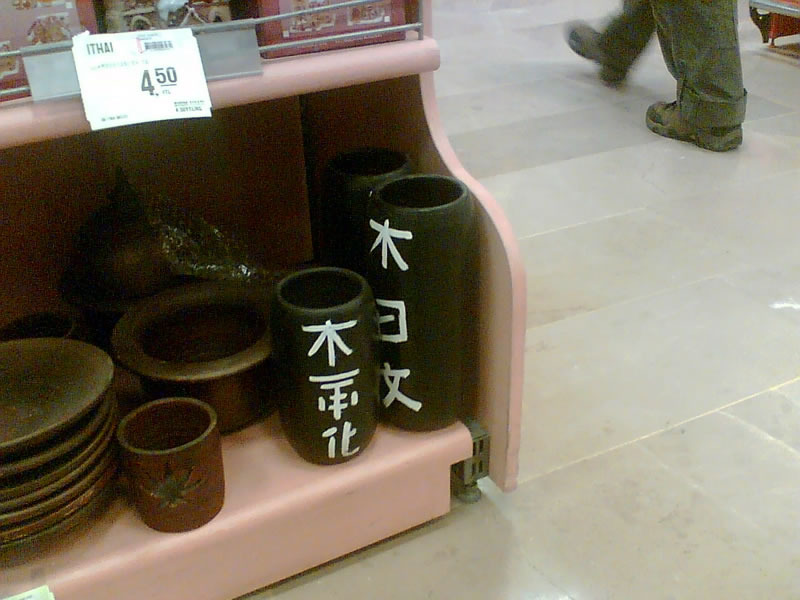
vase_istanbul_turkey

"Asian theme" flower vase with gibberish characters.


Selasa, 25 April 2006

Unlike tattoos, t-shirts are less permanent. They can be tossed away quickly to discard the embarrassment.

Yet, for that brief moment of hearing people quietly discussing what is on your t-shirt is still quite uncomfortable. Fearing the few minutes of uncertainly will come back to haunt you, it lingers in the back of your mind.

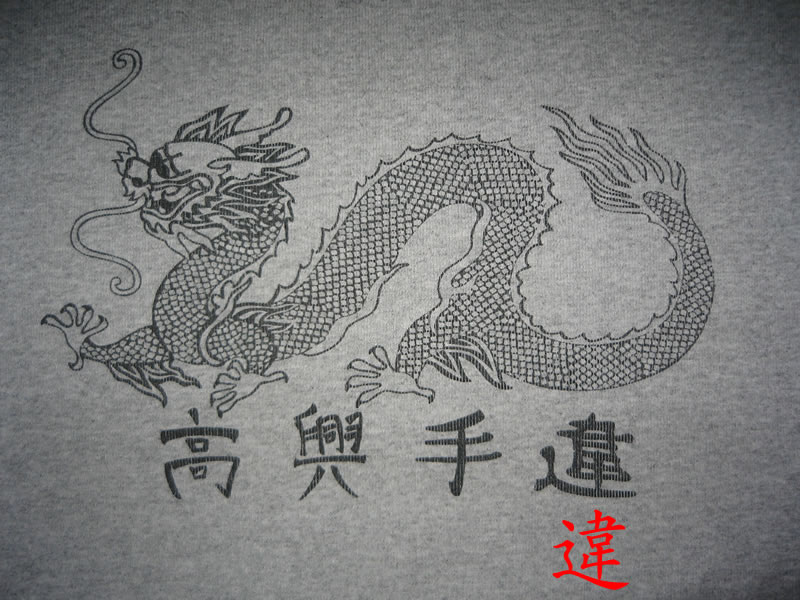
tshirt_gaoxingshouwei

高興手違, what does this phrase mean?

is “high, elevated”, means “thrive, prosper”, and their compound means “happy, cheerful, willing” in Chinese. is “hand”, means “violation, disobey”, and together, they mean “mistake, blunder” in Japanese, as in (or てちがい).

“Happy [hand] violation”, is it some kind of idiom? Or a sexual euphuism for “happy ending” at one those dodgy massage parlors, which always advertise in the back of free publications? (Note: the missing dot in , perhaps the client is not done yet.)

Or it is just complete gibberish.


Kamis, 20 April 2006

I don’t know if the gibberish circled in red is supposed to be two characters or one.


(original)

If it was meant to be one character, then it would be the botched (), which means “land, ground, continent”. It could also be the simplified () with a missing dot and simplified ().

The two other characters are (pick up, collect, tidy up) and (style, system, formula, rule).

So far, the best I can think of is “ground shipping system”.

Maybe he is a loyal UPS/DHL/FedEx employee or customer?

Update: Thanks to a comment by "lalawow", this tattoo may be "six-ten-two" or "sixty-two"

In Chinese, is also used as the accounting form of "six", as "ten", and () as "two".


Most people love their mother or mothers (children with lesbian parents and/or born from fertilized eggs via surrogate mother would have more than one mother). But, it takes a special talent to screw up “mommy” so bad that it would be read as “female horse rice”.


http://www.tatuadores.com/japo-kini-daktat-sevilla-DSCF2568.JPG

媽咪 is Chinese transliteration of “mommy”.

Too bad the tattooist has split into two characters (female), (horse), and forgot about the partial 口 in .

I hope her mother is proud.


Rabu, 19 April 2006

Since both Chinese and Japanese use the same or similar Chinese characters, translations often change their meanings when they are read one way or another.


(original)

The top character means “rice”, and in Japanese, it is used to represent “America”. Second character means “cover, hide, protect”.

Last character means “small round object; pellet, pill”. However in Japanese, it means “circle, perfection, purity, and suffix for ship names” and “testicle/balls” in Chinese, as in 睾丸.

The tattoo may be a phonetic name translation or a ship’s name in Japanese, but when I read it:

“rice covered balls”


Selasa, 18 April 2006

The young lady bearing this tattoo by Juan at Starlight Tattoo in Belleville, NJ, probably thought no one would ever guess what the two characters meant.


http://www.bmezine.com/tattoo/A60417/high/bmepb255095.jpg

The top character normally means “conduct, run, control, manage”, but in Chinese slang, it is the equivalent of “fuck”. The bottom character appears to be a botched (), which means “you”.

It must be nice to express one’s angst via a foreign language, unfortunately she is one ultimately got “fucked”.


Jumat, 14 April 2006

Ryan emailed me this morning after he saw an article about my site in the newspaper. He said the translations of his tattoos were given to him long time ago, he still wanted to verify to see if they are correct or not.


In his email, he has mentioned that the center set of four black characters with red outline where chosen solely based on their looks; therefore I will only focus on the rest two sets of tattoos.

Ryan was told the set of red characters meant “samurai/warrior and something else”. Due to their poor qualify, the two kanji characters looked like either or .

means “hero; gentleman; warrior; manly person” in Japanese, and “husband” in Chinese. means “high steward; grand master” in Japanese, and “doctor” in northern part of China.

I don’t know what those three red katakana キソグ (or キング) meant, except phonetically they are “ki-so-gu” (or "ki-n-gu", aka "king").

He was also told the set of black characters meant “bitter and sweet/kind”. I did recognize as “bitter; hardship, suffering”, but I had trouble trying to figure out the three katakana below.

, “ji-yo-i”, perhaps “Joey” "joy"?